Getting People to Know AnotherBall and Avvy at a Conference ── Our DroidKaigi 2026 and iOSDC Japan 2026 Booth Report
Table of Contents
- Two Things We Wanted the Booth to Say
- From a Flyer and a Sticker to Building an Avatar
- Our Talk Topics Came from Problems Specific to Avvy
- At DroidKaigi 2026
- Taking What We Learned at DroidKaigi to iOSDC
- At iOSDC Japan 2026
- 705 Visitors Across Two Conferences
- What We Took Away from Our First Booth
- Thank You for Stopping By
- We’re Hiring
Hi there! We’re the DevRel team at AnotherBall.
AnotherBall was a gold sponsor of DroidKaigi 2026 and iOSDC Japan 2026, and we ran a booth at both — our first ever. Over five days, 705 people stopped by. Android and iOS engineers built their own avatars in Avvy and tried out our face tracking.
In this post, we’ll cover how we designed the booth and our talks, and how we used what we learned at DroidKaigi to improve things for iOSDC. Along the way, we’ll share what the venues were like and what came out of our first time exhibiting.
Two Things We Wanted the Booth to Say
We had one goal for these booths: get people to know AnotherBall and Avvy through the experience itself. And one more — show that we take the development of Avvy, and the technology behind that experience, seriously.
At AnotherBall we build Avvy, an app that turns you into a VTuber in a minute.
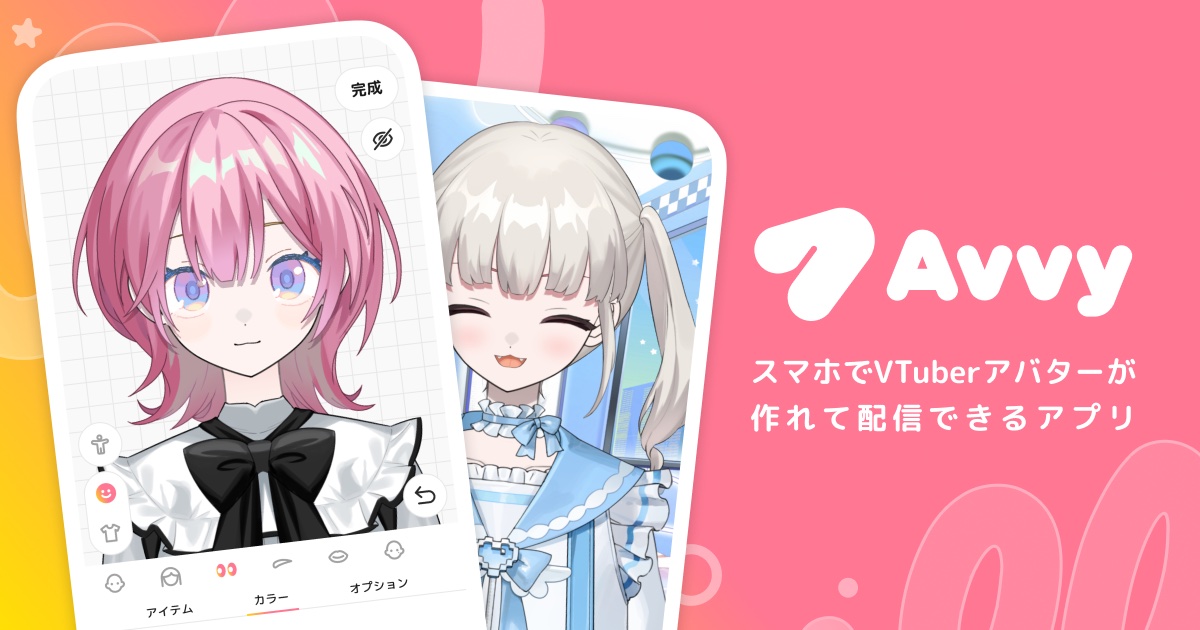
Streaming as a VTuber normally means commissioning an avatar and setting up gear. With Avvy, a phone covers everything: building the avatar, streaming, and face tracking. Every part is drawn by illustrators one at a time, so the 2D avatars you assemble from them have real character.
- Avvy official site: https://avvy.live/
- AnotherBall on note (Japanese): https://note.com/anotherball/n/n4fdcd7c4f005
From a Flyer and a Sticker to Building an Avatar
Visitors got a flyer and a sticker first, along with a quick introduction to AnotherBall, Avvy’s architecture, and our tech stack. If someone looked interested, we walked them through building an avatar. The flyer covered the technology behind avatar creation and face tracking too, so it wasn’t only about the fun side of the product.
Everyone who tried it walked away with an instant photo of their finished avatar, printed on the spot. It’s a novelty meant to leave something in their hands, so the experience sticks after they leave the booth.
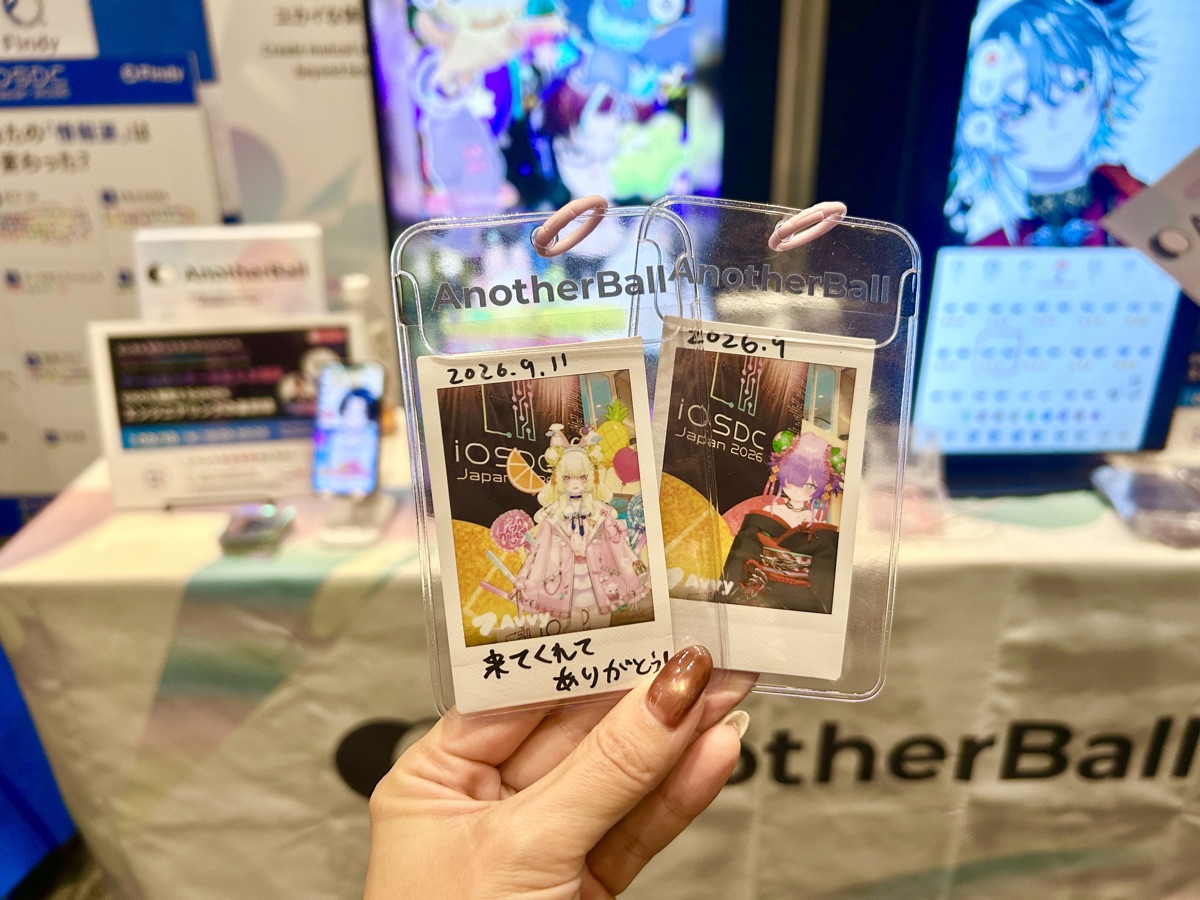
People picked eyes, hairstyles, outfits, and whatever else they wanted. Some got shy about it — this gives away my taste, one said — and kept tweaking the combination. Others showed their finished avatars to each other.
Alongside the avatar builder, visitors tried our face tracking, which mirrors expressions and head movement in real time. Watching the avatar move with them surprised a lot of people, and that’s where conversations about the implementation started, engineer to engineer. That part was the most fun for us.
Finished photos went onto conference name cards. Some people wore the one they made at DroidKaigi to iOSDC, or came back to build a new avatar there, and carried the experience across both conferences.
Why an App Demo and an Instant Photo
We built the booth around the app itself because the clearest way to understand Avvy and its technology is to use it. Building an avatar with your own hands also makes Avvy much easier to remember afterward.
For the novelty, we went with an instant photo, known in Japan as cheki. Cheki are a familiar part of oshikatsu, the Japanese culture of passionately supporting a favorite idol or character. That made them a natural way to turn an Avvy avatar’s cool or cute look into something you can hold.
In practice, the combination worked the way we hoped. Our iOSDC retrospective noted that because visitors got to use the app, it was easy for them to understand what kind of service Avvy is. At DroidKaigi, some people came back to the booth more than once to make another photo, and at iOSDC some visitors greeted us with “Oh, this is the one everyone’s talking about!” In total, 137 people made a photo, roughly 20% of our booth visitors. Many were also surprised to learn that Avvy isn’t just an avatar maker but a streaming platform.
On the other hand, building an avatar takes about five minutes per person, so a line sometimes formed at busy times.
Our Talk Topics Came from Problems Specific to Avvy
Alongside the booth, we had a poster and a session at DroidKaigi, and a Rookies LT at iOSDC. We built the topics around AnotherBall’s face tracking and the way we develop with KMP and UaaL. From there, we looked at the problems we’d run into while building Avvy and how we’d worked around them, and wrote our CFPs (talk proposals) from that.
For example, when we measured the same expressions on Android and iOS, puffing your cheeks showed a big gap. ARKit on iOS uses infrared from the TrueDepth camera to measure the depth of your face, so it picks up puffed cheeks accurately. MediaPipe on Android, on the other hand, returns values close to zero for seven of its expression parameters, known as blend shapes, this one included. For Avvy, that directly affects how faithfully an avatar reproduces your expressions. But any developer handling facial expressions with MediaPipe, or trying to build the same experience on Android and iOS, could run into the same problem.
That comparison became two talks. The DroidKaigi session covered the Android-side problem and how we corrected for it using the geometric relationships between facial landmarks. It also went into how to express differences in platform capabilities through KMP API design, as a way of thinking that carries over to cross-platform work beyond face tracking. The iOSDC LT used measured data to show which of the 52 expression parameters ARKit returns you can trust and which you can’t. Avvy’s overall architecture, which combines KMP and UaaL, was on our DroidKaigi poster.
At DroidKaigi 2026
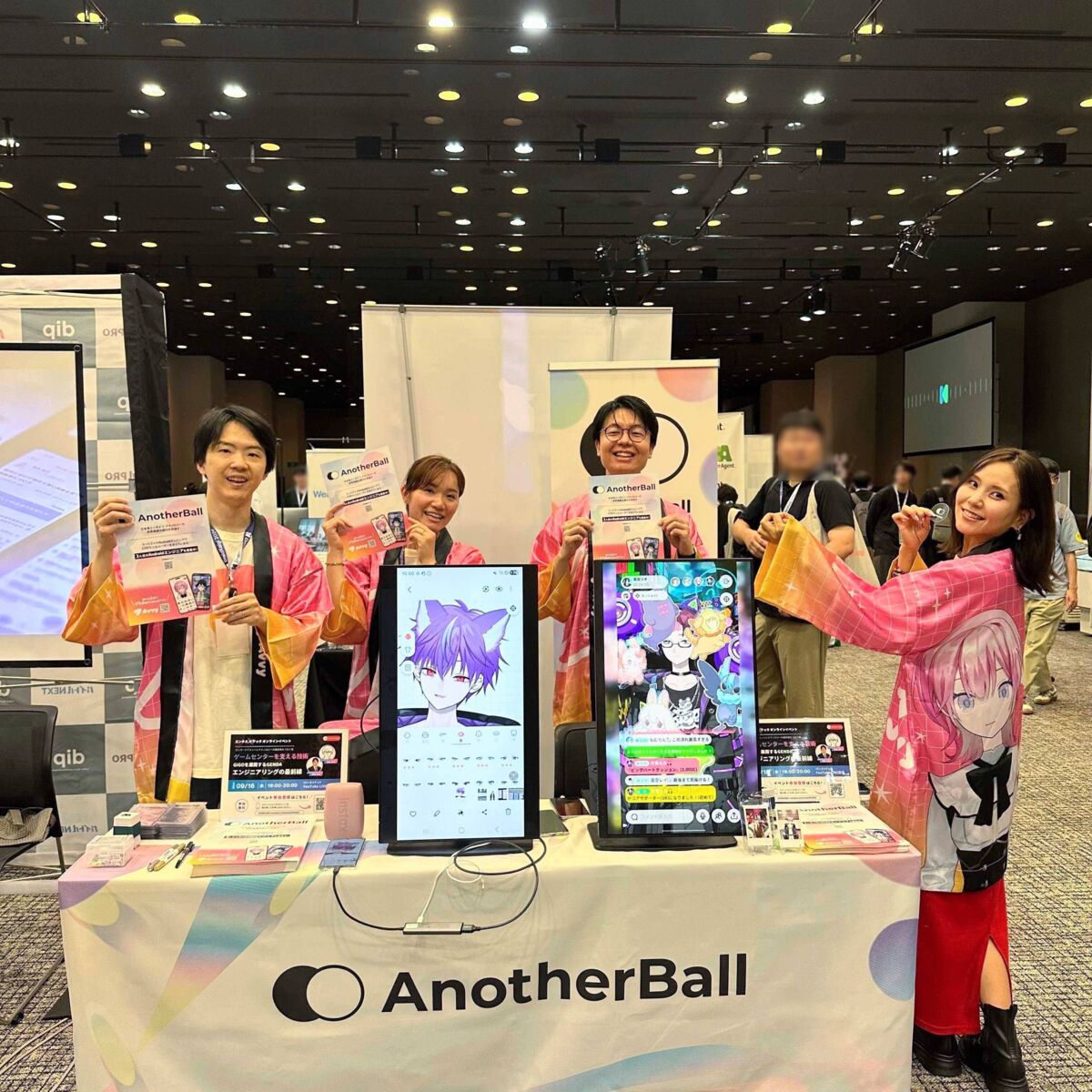
At DroidKaigi 2026, a lot of Android engineers came by to try Avvy.
RIO (@rioX432) and Apippo (@A5th_Faris) from the mobile team presented at the Day 0 poster session. The poster laid out Avvy’s whole system — native, Unity, KMP, and cloud — plus the Android tech stack, on a single sheet.
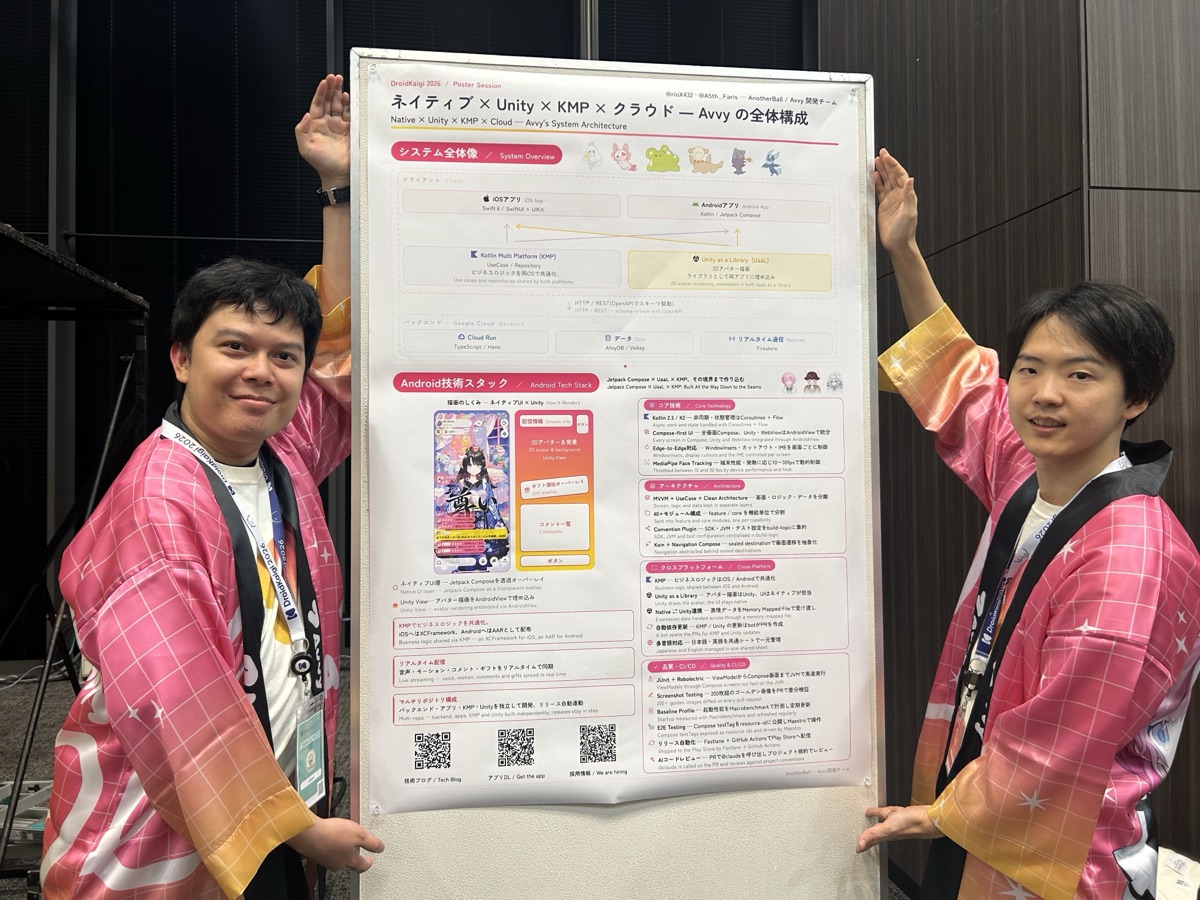
Avvy’s apps are native on Android and iOS, with the business logic shared through KMP (Kotlin Multiplatform) and Unity embedded for avatar rendering via Unity as a Library (UaaL). It’s a modern setup that brings native, KMP, and Unity together. We’ve written about how we build on it in earlier posts:
- Mobile App Development with KMP × Unity UaaL ── Multi-Repo Setup and Automation
- Embedding UaaL in a SwiftUI App: Managing the View Lifecycle
- KMP × Kotlin 2.3 ── How Android Got Slower While iOS Builds Improved by 47%
On September 3, RIO gave a talk titled How to Fight the Accuracy Limits of MediaPipe Face Landmarker: Landmark Geometry in Practice (talk in Japanese). About five people came to Ask the Speaker, where attendees can put questions to the speaker directly, and some visitors came by the booth with questions after the poster session or the talk.
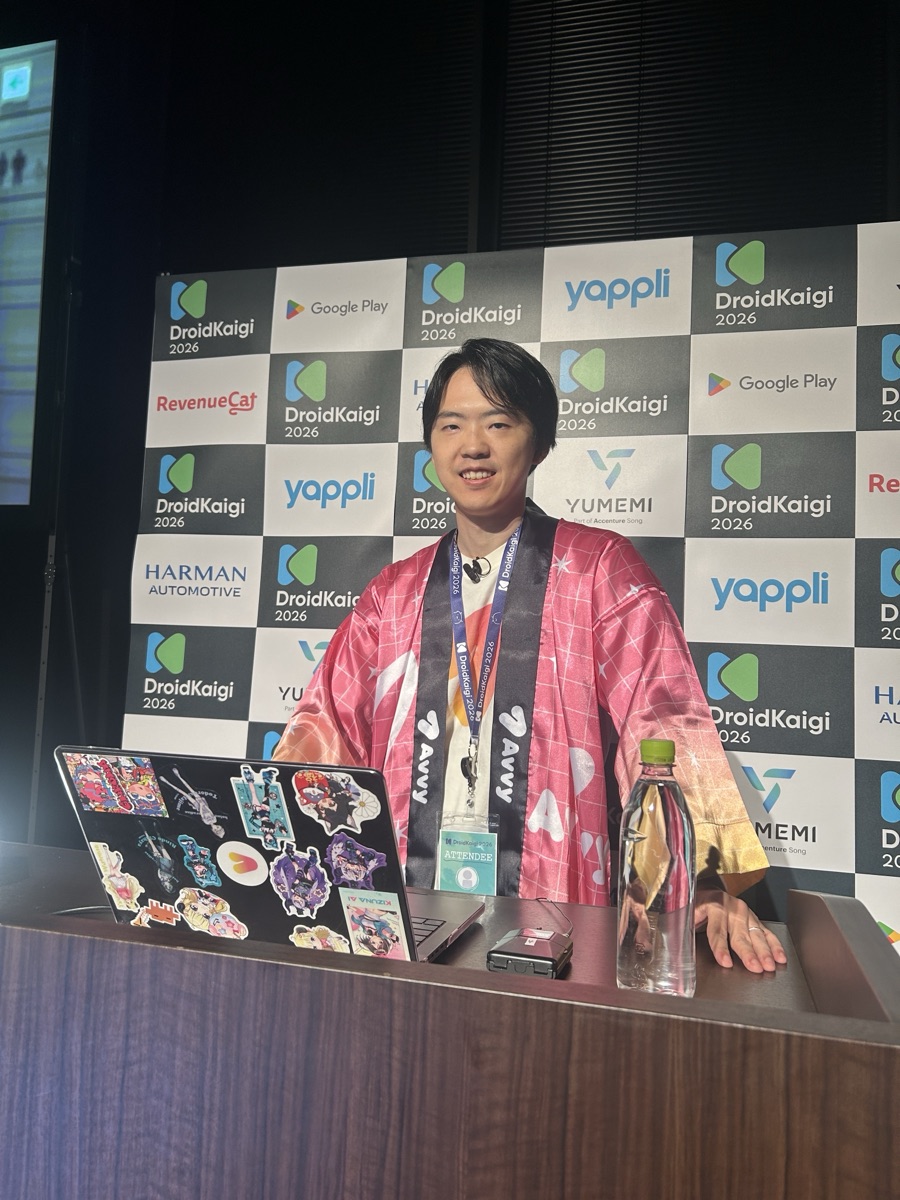
Between the talk and the booth, we got to show not just the product but how we build it.
Taking What We Learned at DroidKaigi to iOSDC
After DroidKaigi, the team ran a KPT retrospective, sorting our notes into what to Keep, what was a Problem, and what to Try. In the week or so before iOSDC, we improved what we could.
The biggest change was how we printed the photos. At DroidKaigi, we sent images from a smartphone to an instax mini Link 3 photo printer over Bluetooth. But in a venue packed with people and devices, the connection tended to be unstable, and at times it took a while to get from a finished avatar to a printed photo.
So at iOSDC, we turned off the printer’s auto power-off in its app to keep the Bluetooth connection from dropping. We had three iPhones for the demo and two printers, so we paired each printer with a fixed iPhone. Avatars made on the third iPhone went over AirDrop to a printer-paired iPhone and were printed from there. We no longer had to switch which phone a printer was connected to, and our iOSDC retrospective listed the easier connection as one of the things that went better than at DroidKaigi.
With auto power-off disabled, the printer’s battery drains faster. To make printing more reliable, we’re also looking into printing over a wired connection next time.
Beyond the photos, we changed a few other things:
- Put the flyers in a stand so they were easy to grab, and stood the demo iPhones up in stands
- More people took a flyer at DroidKaigi than we’d expected, so we brought 400 to iOSDC
- Took turns visiting other sponsors’ booths
Our iOSDC retrospective called out the flyer and iPhone setup as a clear improvement over last time. Visiting other booths also led to new connections with companies exhibiting in areas close to ours.
At iOSDC Japan 2026
At iOSDC Japan 2026 we ran the same kind of booth, centered on Avvy’s avatar builder and face tracking.
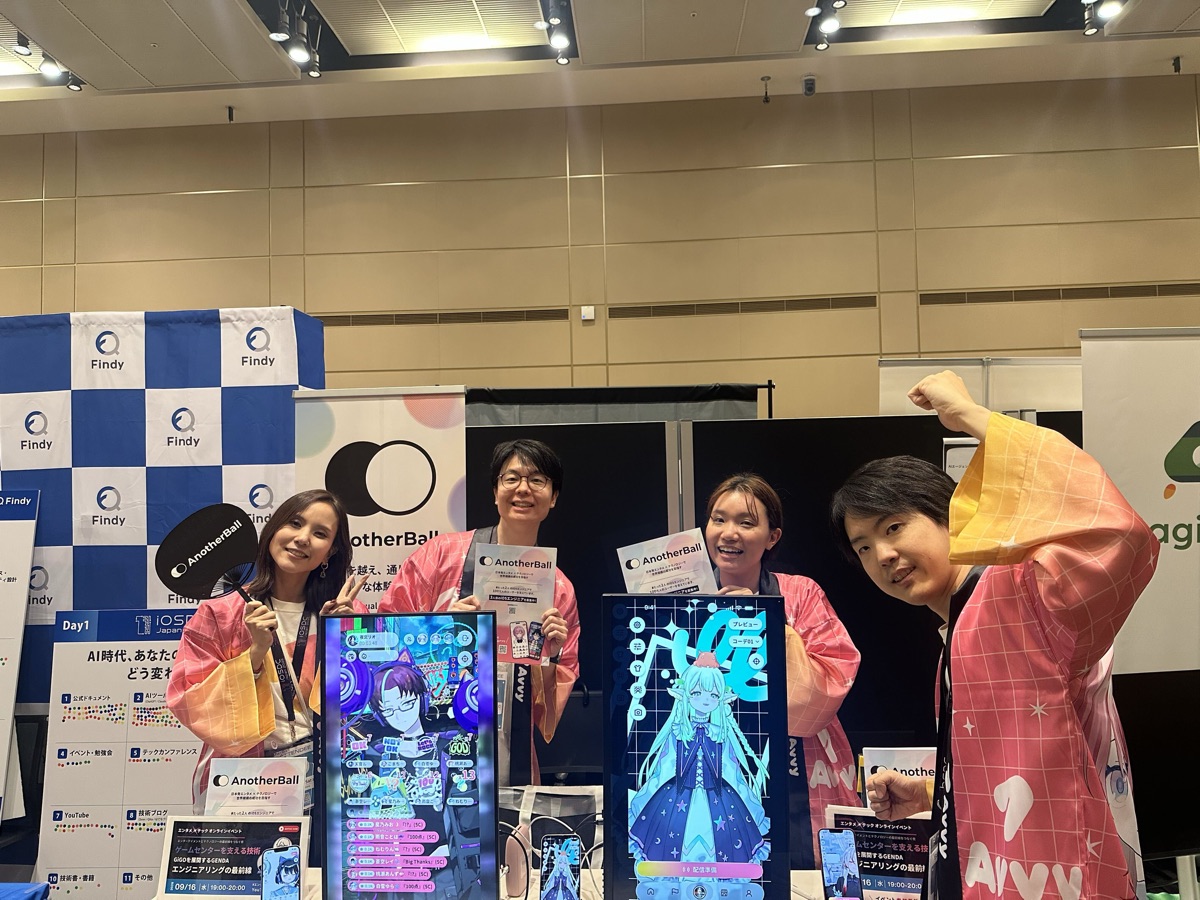
With people who build iOS apps every day, we talked about camera-driven visuals, real-time processing, mobile development in general, and how to keep a device from overheating. The iPhone 14 in our demo ran face tracking from morning to evening while plugged in, and its frame rate never dropped.
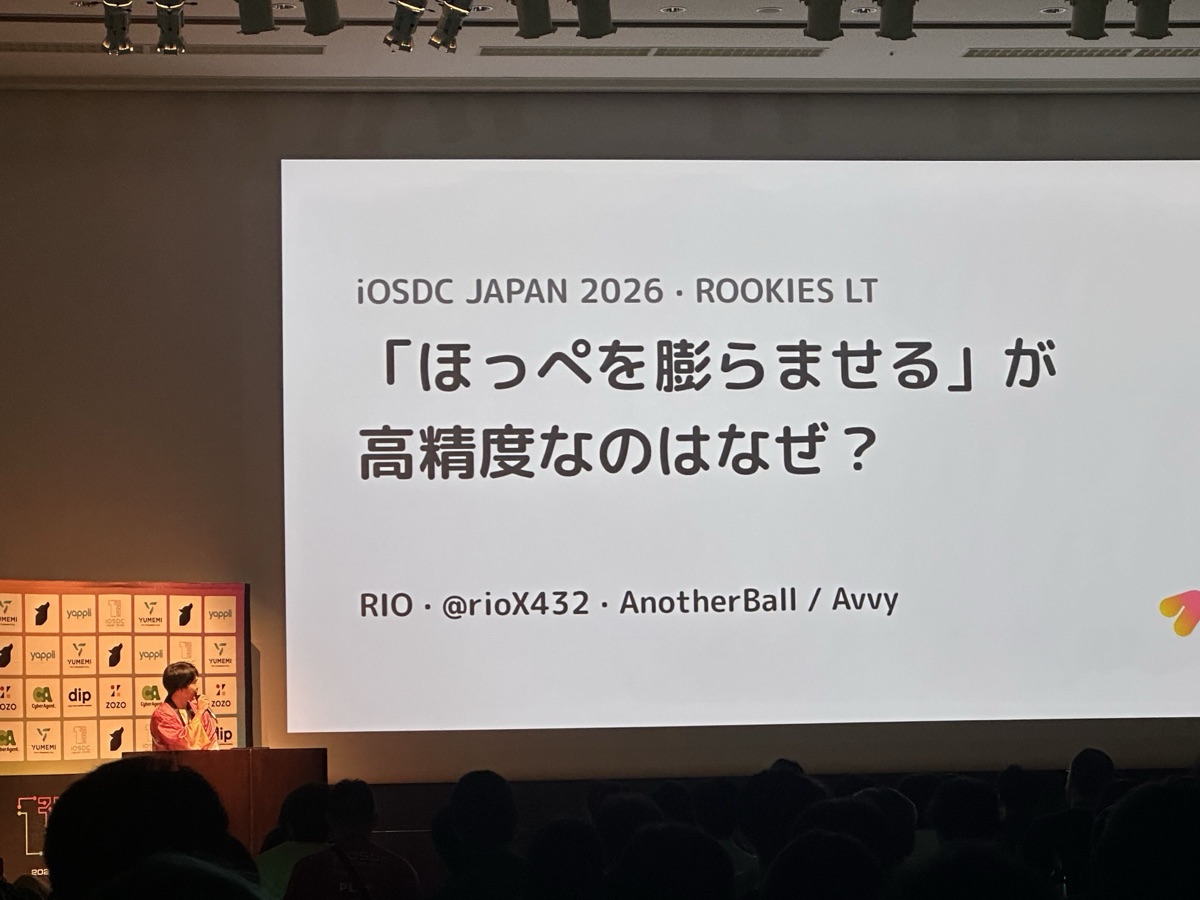
RIO also took the Rookies LT stage at iOSDC Japan with Why Is “Puffing Your Cheeks” Tracked So Accurately? (talk in Japanese). It’s the iOS counterpart to the DroidKaigi session.
705 Visitors Across Two Conferences
We counted visitors by how many flyers were left at the end of each day. 330 people came to the AnotherBall booth over two days at DroidKaigi 2026, and 375 over three days at iOSDC Japan 2026.
That adds up to 705 booth visitors across the two conferences. For a first time exhibiting, plenty of people got to try Avvy.
| Conference | Days | Booth visitors |
|---|---|---|
| DroidKaigi 2026 | 2 | 330 (55 built an instant photo) |
| iOSDC Japan 2026 | 3 | 375 (82 built an instant photo) |
| Total | 5 | 705 (137 built an instant photo) |
What We Took Away from Our First Booth
While preparing, we went back and forth on three questions. How do you convey what’s good about Avvy in a short conversation? How do you get someone to know AnotherBall through that experience? And how do you connect the hands-on part, the technical explanation, and the novelty into one flow?
Two things stood out once we were there. Seeing visitors react right in front of us, and getting to talk with so many engineers about the technology at length.
Avvy’s Android and iOS apps are each built by two engineers, and the flyer we handed out at the booth put that front and center.
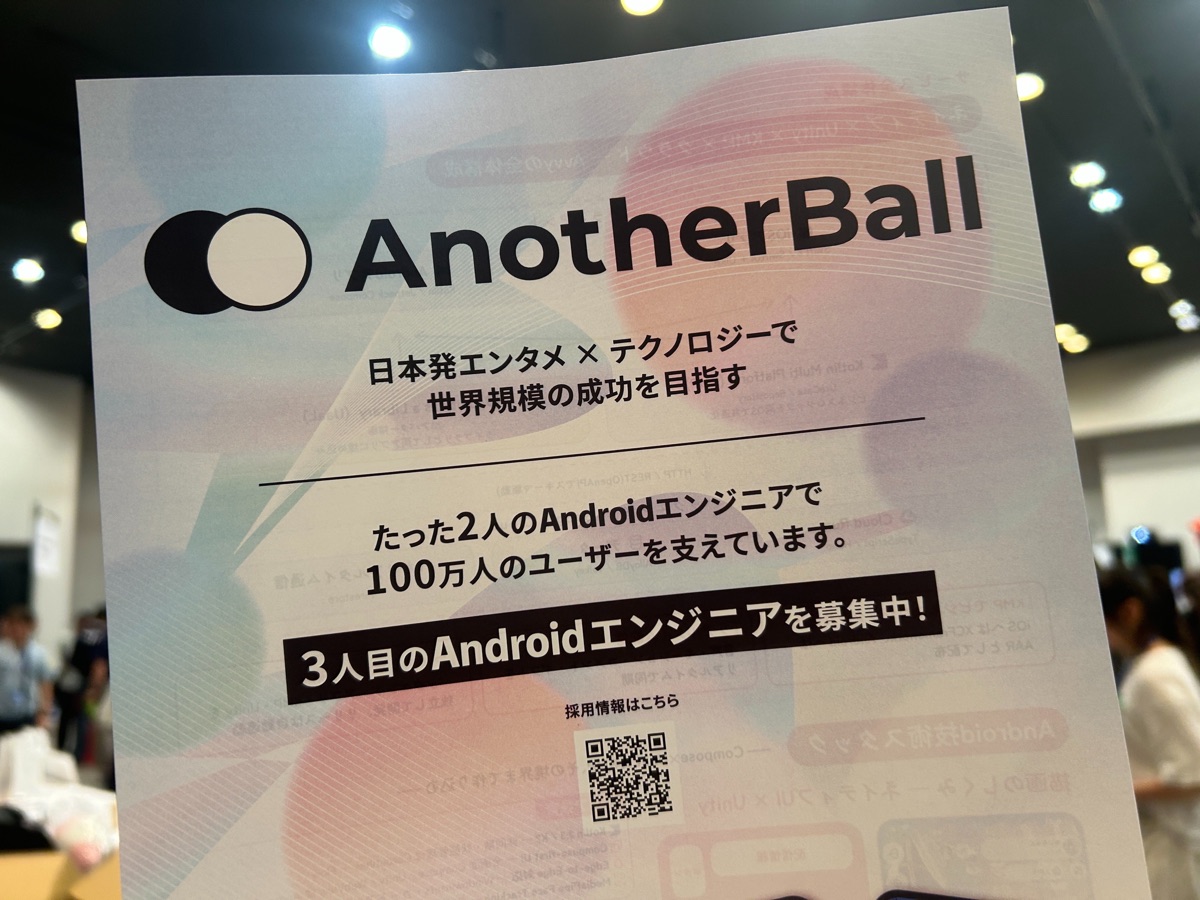
When that came up while we were talking tech, some visitors were surprised by how small the team is.
Almost everyone we met was hearing about AnotherBall and Avvy for the first time. Even so, after the conferences we started getting replies to recruiting messages and requests for casual interviews. That shift suggests the booths did move the needle on how many people know us.
What We Want to Try Next Time
Our two retrospectives also produced some ideas for the next conference:
- Put up a sign about the photos at the booth so more people notice them
- Offer a quicker way in, such as a random avatar, for people short on time
- Share what kind of organization AnotherBall is, not only what Avvy is
- Get more of the team submitting CFPs, and turn things like our booth photos into talk topics
Thank You for Stopping By
To everyone who visited the AnotherBall booth and everyone who came to our talks, thank you. Our thanks also go to the organizers and everyone who made DroidKaigi 2026 and iOSDC Japan 2026 happen.
We ran these booths with a small crew, and every member who went gave everything their role asked for. Getting through our first exhibit and talking with so many people face to face made the whole team happy.
See you at the next conference!
We’re Hiring
AnotherBall is looking for mobile engineers. We’d love to work with people who want to build apps with KMP and Unity and grow the product together.
If you’d like to be our third iOS or Android engineer, apply through the links below.